


Bac Ninh will plan urban railways through industrial parks
Tuesday, 30 September 2025
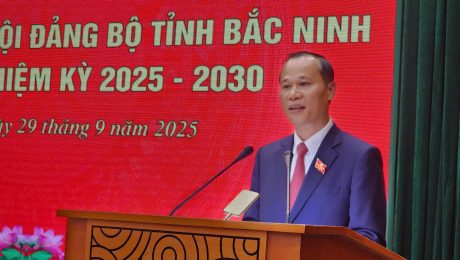
Mr. Mai Son – Standing Vice Chairman of the Bac Ninh Provincial People’s Committee said: In the 2025 – 2030 term, Bac Ninh province will strive to plan in detail the urban railway network, this urban railway will connect industrial parks together.
This Congress of Bac Ninh Provincial Party sets out 5 key tasks, 3 breakthroughs, and 4 groups of solutions. “The three breakthroughs are infrastructure, human resources, and institutions. This is a continuation of the previous term,” said Mai Son, Standing Vice Chairman of the Bac Ninh Provincial People’s Committee.
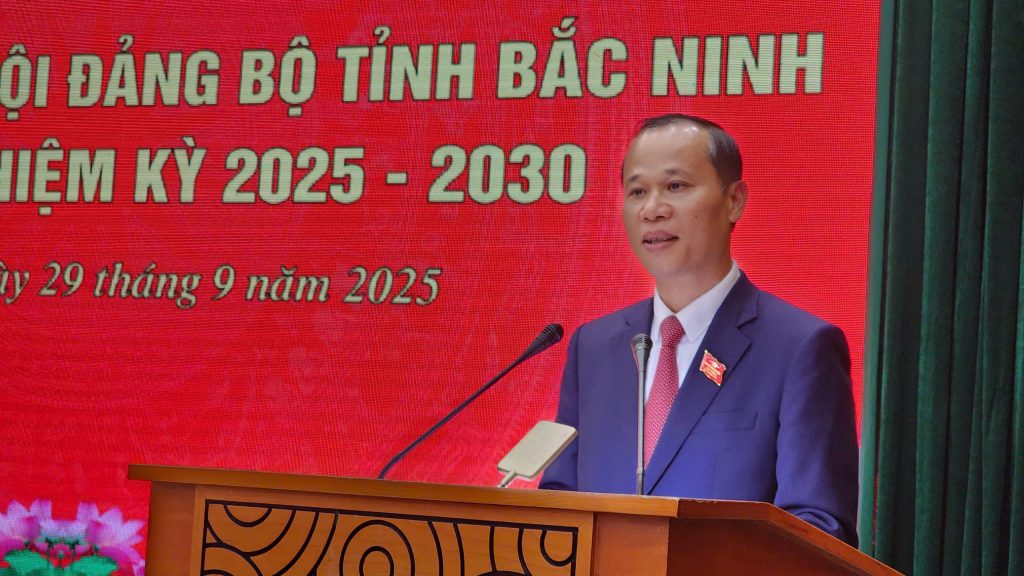
Mr. Mai Son – Standing Vice Chairman of the Bac Ninh Provincial People’s Committee
To have a synchronous and modern transport network, the Standing Vice Chairman of the People’s Committee of Bac Ninh province said that it is necessary to make a good planning. In the 2025 – 2030 term, Bac Ninh province will strive to plan in detail the urban railway network based on the provincial planning for the 2021-2030 period, with a vision to 2050, approved by the Prime Minister.
“This urban railway will connect industrial parks together to serve the transportation of goods and workers to work,” said the Standing Vice Chairman of Bac Ninh province.
Mr. Mai Son also stated that in the coming time, Bac Ninh province will continue to invest in connecting roads with neighbouring provinces and cities. “The largest project being implemented is the 120m wide road connecting Gia Binh airport with Hanoi city,” said the Standing Vice Chairman of Bac Ninh province. Gia Binh airport will be the largest in the North, Noi Bai airport will reduce its scale.
Source: https://baoxaydung.vn
- Published in News
No Comments
Viglacera received two prestigious awards in September 2025
Monday, 29 September 2025

Viglacera received two prestigious awards: Top 25 Leading Listed Brands in 2025, a prestigious ranking announced by Forbes on 25th September 2025 and Top 50 Most Effective Businesses in Vietnam voted and organized by Nhip Cau Dau Tu Newspaper on 27th September 2025.
The Top 25 Leading Listed Brands in Vietnam ranking by Forbes Vietnam is one of the most prestigious rankings. This is an exclusive calculation method from Forbes USA, with financial data from ACB Securities Company Limited (ACBS), ensuring objectivity and high accuracy.
Brand value is defined based on the contribution of tangible and intangible assets to corporate profits. Forbes Vietnam collects data from listed companies on the three exchanges HOSE, HNX and UPCoM, calculates profits from intangible assets, allocates brand contribution coefficients by industry, and combines the average P/E ratio of the industry at the time of assessment. The ranking accurately reflects reputation, brand strength and business efficiency.
With its brand value increasing significantly, Viglacera continues to be honored in the TOP 25 Leading Listed Brands in Vietnam 2025. This achievement affirms Viglacera’s position in the construction materials and real estate industry, thanks to its sustainable development strategy, outstanding product quality, and strong presence in both domestic and international markets.
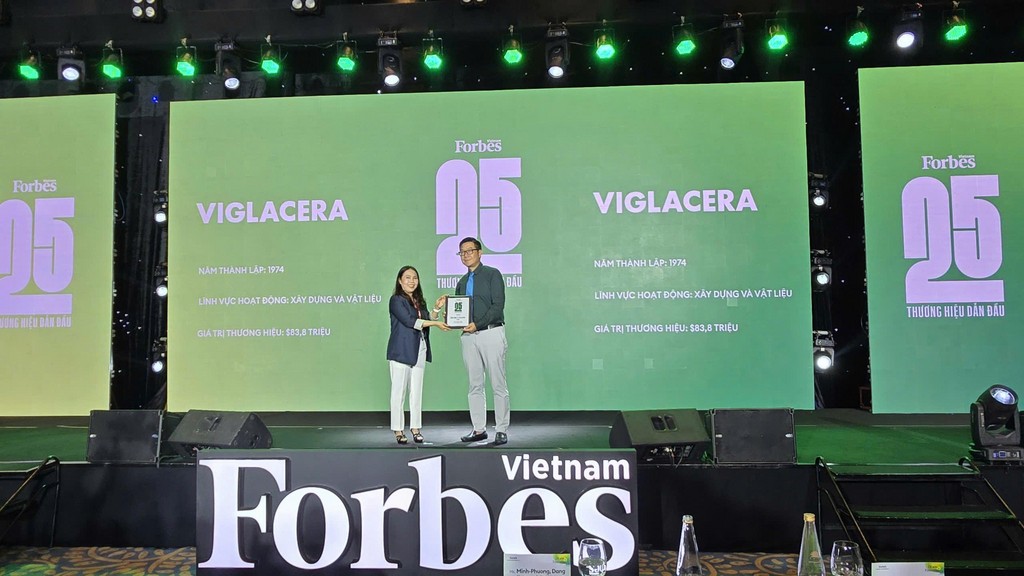
The second award received was “TOP 50 effective businesses” in the Vietnamese stock market, a valuable and prestigious ranking by Nhip Cau Dau Tu Magazine with the consultation of leading economic and business experts.
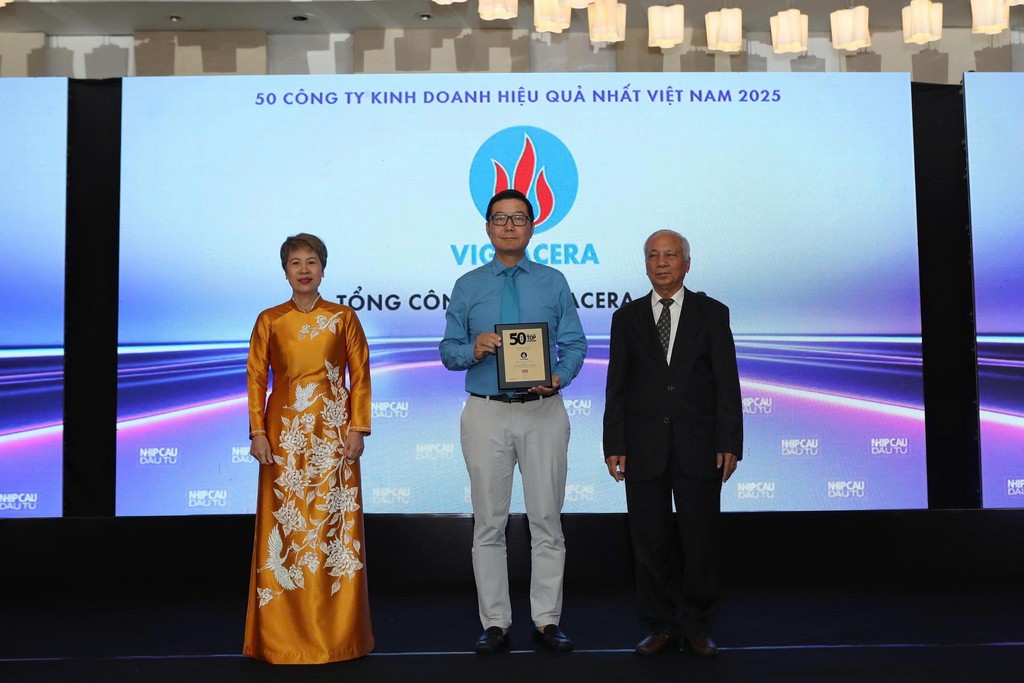
Based on the above evaluation criteria, in 2024, Viglacera Corporation (VGC) had a profit increase of 35% compared to the plan; return on equity of the Parent Company (ROE) was 15.5%; The Corporation timely paid dividends to shareholders at 22% in cash.
- Published in News
Viglacera leads the joint venture to invest in the Tien Duong 1 Social Housing Project in Hanoi
Thursday, 25 September 2025
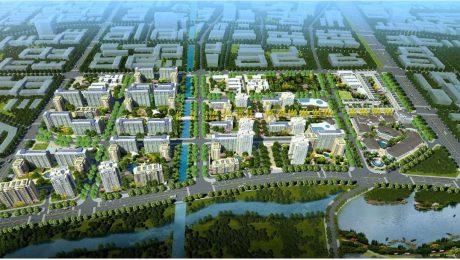
Hanoi – on 24th September 2025, the Hanoi People’s Committee issued Decision No. 4851/QD-UBND, officially approving the investor consortium to implement the project of building Tien Duong 1 Social Housing Area, in Phuc Thinh Commune, Hanoi City, implemented in the form of investor selection and bidding in land-use projects.
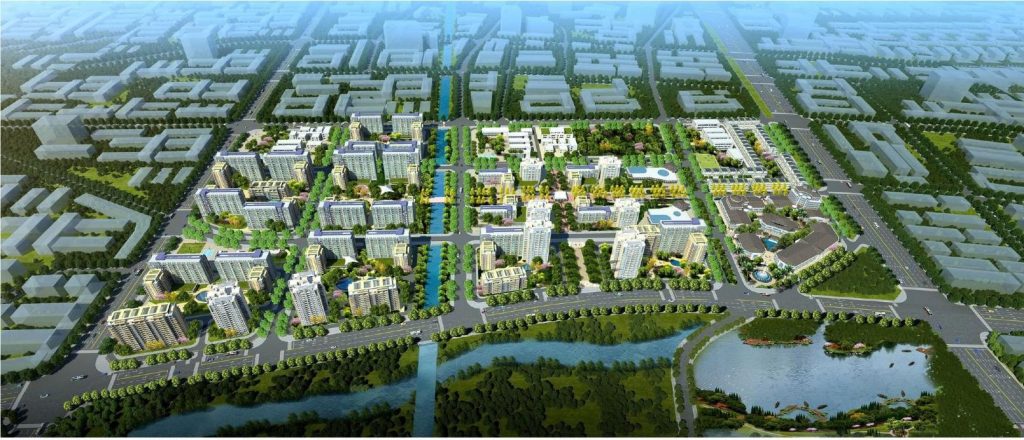
the Tien Duong 1 Social Housing Project in Hanoi
Before that, the Tien Duong 1 Social Housing Construction Project, in Tien Duong commune, Dong Anh district, Hanoi city (now Phuc Thinh commune, Hanoi city) was approved for investment in the Decision No. 618/QD-UBND dated 24th December 2024 of the Hanoi People’s Committee. On 26th June 2025, the City People’s Committee continued to approve the results of the call for interest in the Tien Duong 1 Social Housing Construction Project in Decision No. 3189/QD-UBND.
These are important legal steps to implement a large-scale project with a total estimated investment of 8,690,426 billion VND, excluding compensation, support, and resettlement. Estimated compensation costs 616,996 billion VND.
The approved investor consortium includes: Viglacera Corporation – JSC, Hoang Thanh Infrastructure Investment and Development JSC and Central Construction JSC.
The total capital contribution of these three investors is 1,500 billion VND. Of which, Viglacera contributes the largest capital ratio of 55% (825 billion VND), Hoang Thanh Company contributes 30% (450 billion VND) and Central Company contributes 15% (225 billion VND). Thus, the capital contribution of the investor: 1,500 billion VND (accounting for 16.1% of the expected investment capital of the project). Mobilized capital: 7,807.422 billion VND (accounting for 83.9% of the expected investment capital).
The project is implemented from 2024 to 2030. The operating period is 50 years, calculated from the date of decision for the investor to have land allocated, land leased and land use purpose changed.
The Hanoi People’s Committee requests the investor consortium to comply with the Housing Law and related legal regulations; ensure financial resources and complete procedures on planning, land, and construction before implementation. The City’s functional agencies are assigned to support and closely monitor the implementation of this project in accordance with current legal regulations…
According to the Decision approving the investment policy, the land area for research and project implementation is nearly 44.6 hectares. The population is about 12,465 people. This project will provide about 3,530 apartments (including 3,103 social housing units, 427 commercial apartments) and 99 adjacent low-rise houses.
- Published in News
Van Phong – Nha Trang Expressway completed, opening a big road for Khanh Hoa development
Monday, 22 September 2025
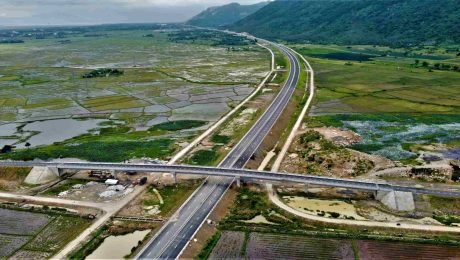
On 20th September, Project Management Board 7 (Ministry of Construction) announced that the last 13km of the Van Phong – Nha Trang expressway has just been completed, from the entrance of Co Ma tunnel (Dai Lanh commune) to Dien Tho commune.
This event marks the completion of the entire project, helping the North – South expressway run smoothly through Khanh Hoa, while strengthening the connection with Ho Chi Minh City and the Central Highlands through Deo Ca tunnel.
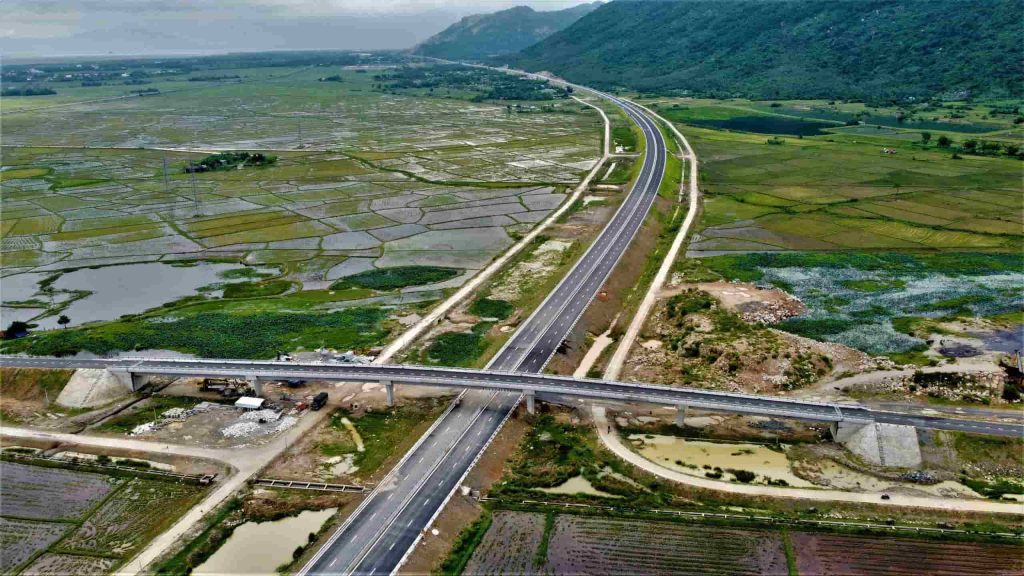
the last 13km of the Van Phong – Nha Trang expressway has just been completed. Photo: Hữu Long
The Van Phong – Nha Trang expressway has a total investment of more than 11,800 billion VND. In the first phase, the route will be built with 4 lanes, operating speed of 90km/h; when completed, it will reach a scale of 6 lanes, maximum speed of 120km/h.
The route not only plays the role of the artery of the South Central region but also opens a new development opportunity for North Khanh Hoa, associated with the potential of Van Phong international transit port.
The exploitation of the entire Van Phong – Nha Trang route is expected to create a driving force for socio-economic development for the region.
The route opens opportunities to form a chain of urban areas, industrial parks, and services along the highway corridor; at the same time, contributing to the development of Van Phong and Nha Trang tourism, becoming an attractive destination in the South Central region.
Source: https://laodong.vn
- Published in News
Recent Posts
-
Nippon Zoki (Japan) Invests $15 Million in Spice Processing Plant at Tran Yen Viglacera Industrial Park – Lao Cai Province
Nippon Zoki (Japan) has officially invested in ... -

VIGLACERA BOOSTS INVESTMENT PROMOTION CONNECTING SOUTH KOREAN ENTERPRISES IN SEOUL
South Korea is currently solidifying its positi... -
VIGLACERA INDUSTRIAL PARKS ATTENDS THE “2026 ENTERPRISE GLOBALIZATION ROADSHOW” INVESTMENT PROMOTION EVENT SERIES IN HANGZHOU, CHINA
Recently, Viglacera participated in the investm... -

Viglacera Newsletter Q2 2026
Viglacera Newsletter Q2 2026... -
GROUNDBREAKING OF THE HA NOI – QUANG NINH HIGH-SPEED RAILWAY PROJECT
On April 12, the People’s Committee of Qu...