


Green transformation is no longer an option but is becoming a prerequisite for industrial parks (IPs) to integrate deeper into the global supply chain. Anticipating this trend, Viglacera has been collaborating with leading green building experts to develop its own set of criteria for Green – Smart Industrial Parks, piloting it at several units within its system and gradually scaling up the model.
Green transformation – an inevitable requirement to maintain a position in the global supply chain
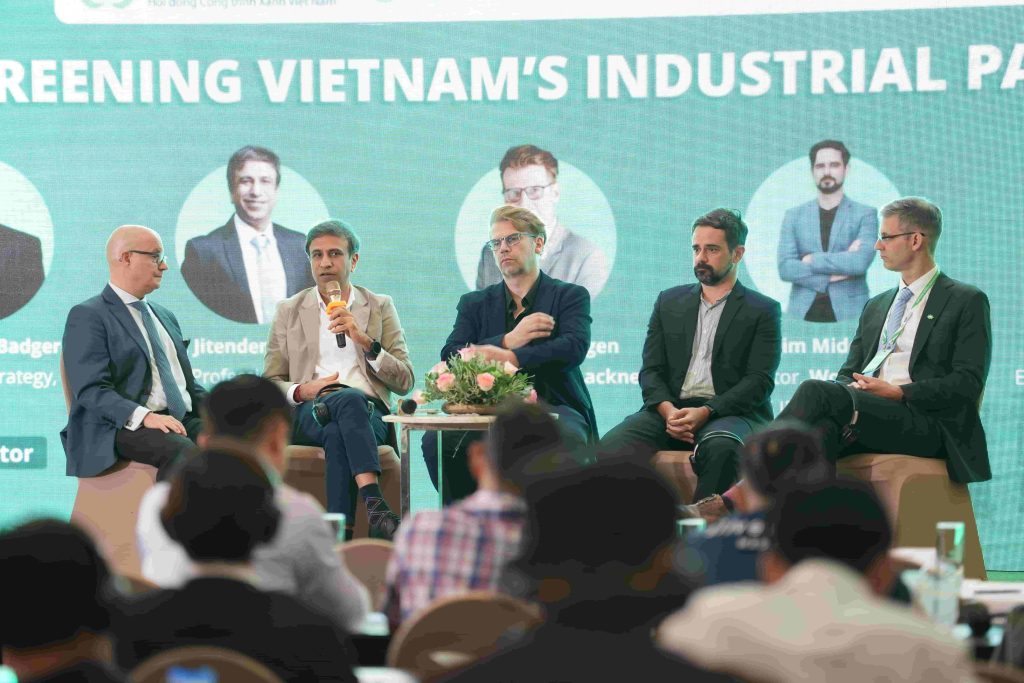
At the workshop “Greening Industrial Parks in Vietnam” organized by the Vietnam Green Building Council (VGBC) on July 7, 2026, in Ho Chi Minh City, domestic and international experts reached a consensus: to enhance competitiveness and maintain a solid position in the global supply chain, industrial parks need to shift from an initial investment cost mindset to life-cycle efficiency, while planning sustainable infrastructure from the very beginning.
Ms. Phan Thu Hang, Chairperson of the VGBC Board of Directors, emphasized that ESG criteria, carbon emissions, renewable energy, and climate change resilience have now become crucial factors in investment decisions, rather than just location, infrastructure, and costs as in the past.
Mr. Douglas Snyder, Executive Director of VGBC, added that in the context of Vietnam exporting around USD 50 billion per year to the EU in sectors affected by the Carbon Border Adjustment Mechanism (CBAM), developing IPs that meet green standards needs a comprehensive approach. This means combining ESG criteria with economic efficiency—ranging from resource efficiency, energy-water-waste management to biodiversity conservation and the quality of infrastructure serving workers.
Long-term planning from the initial stage
Mr. Torsten Illgen, President of Inros Lackner, stated that the most crucial factor when building a green IP is long-term planning from the outset, where water management must be the central focus to reduce flood risks.
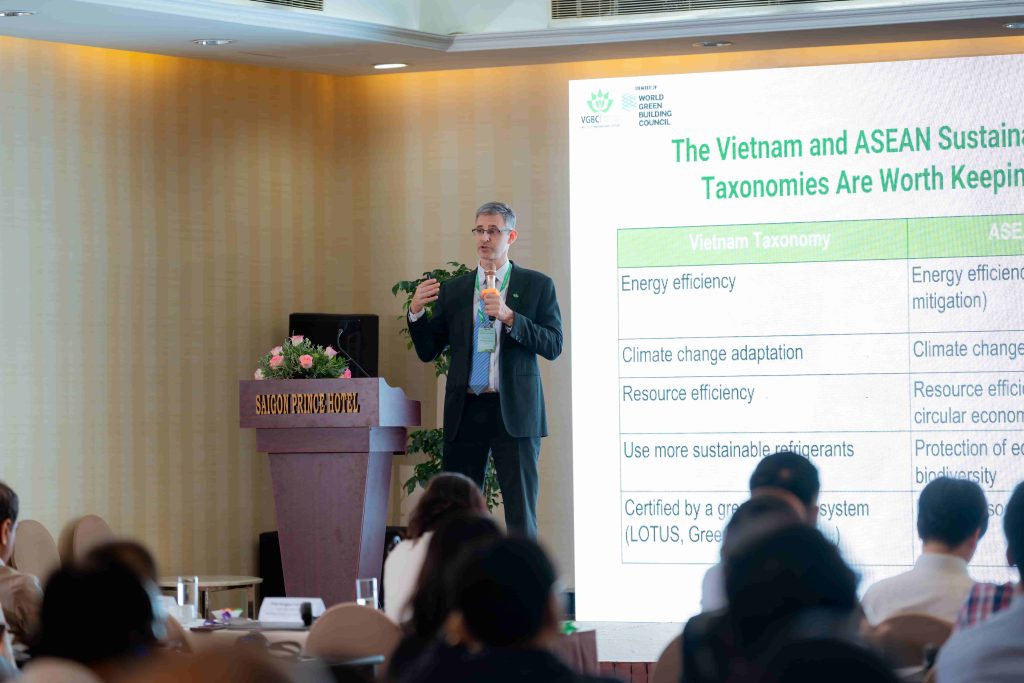
Mr. Tim Middleton, VGBC Board Member and Senior LOTUS IP Consultant, noted that the first step in green IP development is not technology investment but establishing a suitable roadmap through a gap analysis between reality and standards. He also shared that an increasing number of developers in Vietnam are placing high requirements on project life-cycle costs rather than only looking at initial investment costs.
Mr. Tim Middleton, VGBC Board Member and Senior LOTUS IP Consultant, noted that the first step in green IP development is not technology investment but meeting the pressing demand for project life-cycle costs instead of being one-sidedly biased towards initial investment costs.
From a technical solution perspective, Mr. Jitender Khurana, CEO of Professional Business at Signify Southeast Asia & Far East, suggested that lighting and energy solutions need to be integrated right from the planning stage, where LED systems combined with IoT can help save up to 70-80% of electricity consumption.
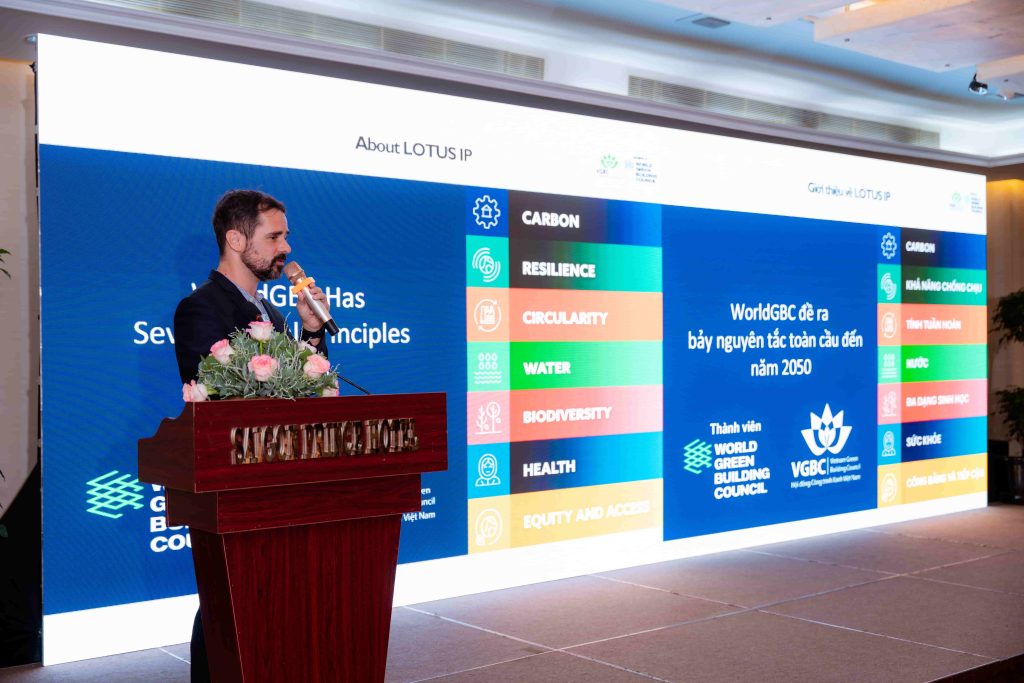
Also at the workshop, the LOTUS Industrial Park (LOTUS IP) pilot certification system was introduced as a comprehensive set of criteria to assess the sustainability of IPs throughout the planning, construction, and operation phases. It encompasses criteria groups from governance, resilience, energy – carbon emissions, materials – circular economy, and water resources to public health and social infrastructure.
Digital transformation and smart energy management for industrial parks
In the thematic session on digital transformation and energy management, Mr. Lien Minh Nhut, Technical Consultancy Director of Schneider Electric Vietnam, introduced a smart industrial park model based on a platform combining electrification, automation, and digitalization to connect all equipment within the park. According to him, collecting and analyzing real-time operational data helps make more accurate management decisions, thereby optimizing energy efficiency, improving operational performance, and increasing adaptability to new technological trends such as AI or energy transition.
Ms. Tran Thuy Tien, Market Development & External Relations Director of Constant Energy Vietnam, further shared highly practical renewable energy solutions for greening IPs, including: solar power systems flexibly deployed in various forms (rooftop, solar farms, etc.) to provide on-site clean power; energy storage systems to help balance electricity consumption and increase grid stability for factories; the direct power purchase agreement mechanism allowing businesses to access renewable energy at competitive prices without intermediaries; along with 0 CAPEX – 0 OPEX financial models, under which the consultancy unit handles everything from licensing and installation to system maintenance.
Viglacera actively cooperates with experts to shape the Green – Smart Industrial Park model
In the process of developing Green – Smart criteria for industrial parks, Viglacera has been collaborating with the Vietnam Green Building Council (VGBC) – the sole representative organization of the World Green Building Council in Vietnam – to exchange expertise, reference assessment frameworks, and update the latest sustainable industrial park development trends worldwide.
This partnership helps Viglacera access international standards and practices researched and introduced by VGBC, including the LOTUS Industrial Park (LOTUS IP) pilot certification system—a comprehensive set of criteria assessing the sustainability of industrial parks throughout the planning, construction, and operation phases. On this basis, Viglacera is gradually perfecting its own set of Green – Smart Industrial Park criteria, which both suits the actual conditions of IPs within its system and approaches the benchmarks that VGBC and the international green building community are aiming for.
This approach closely follows the exact spirit recommended by international experts: planning sustainable infrastructure from the beginning, evaluating efficiency based on the project’s life cycle rather than relying solely on initial investment costs, while seamlessly integrating solutions for resource efficiency, clean energy, and environmental control, focusing on green spaces that yield emission reduction benefits, and managing smart infrastructure based on a unified system.
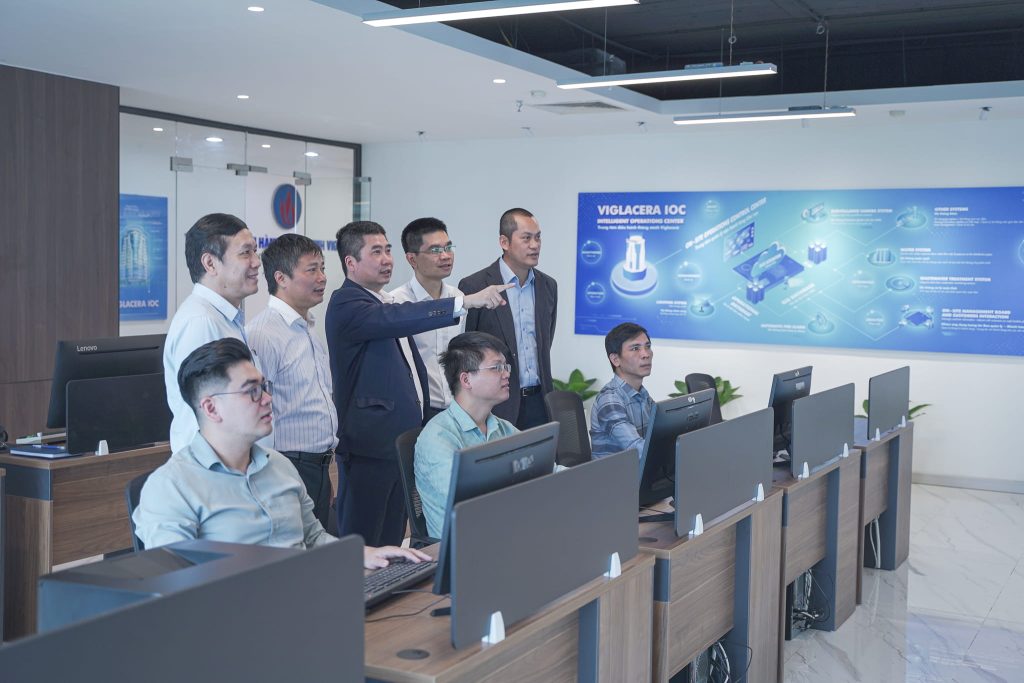
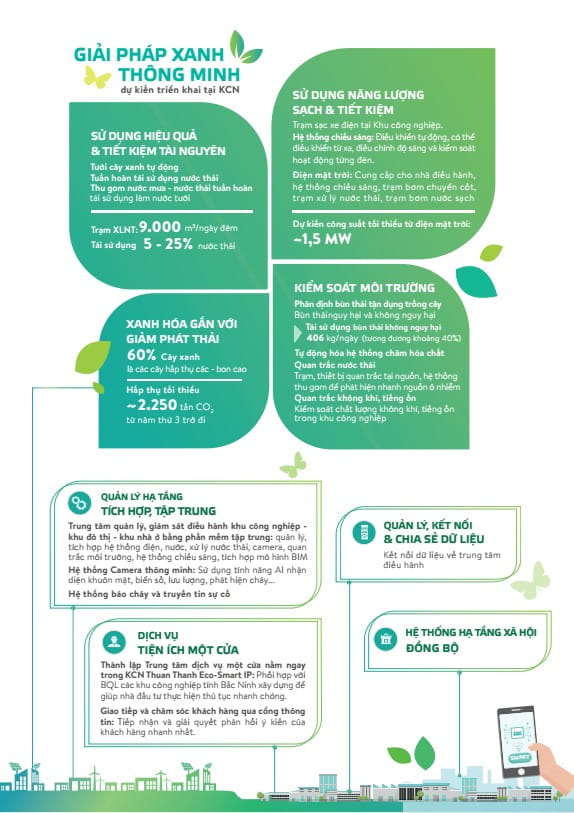
This orientation is reflected throughout key pillars: efficient use and circulation of water resources; application of clean energy along with lighting and automated operation solutions to optimize energy costs; continuous environmental control and monitoring; increasing green space areas aligned with emission reduction targets; and building a centralized infrastructure management and operations center that integrates digital technology and real-time data to enhance operational efficiency as well as investor experience.
Piloting at Thuan Thanh Eco-Smart IP and the replication roadmap
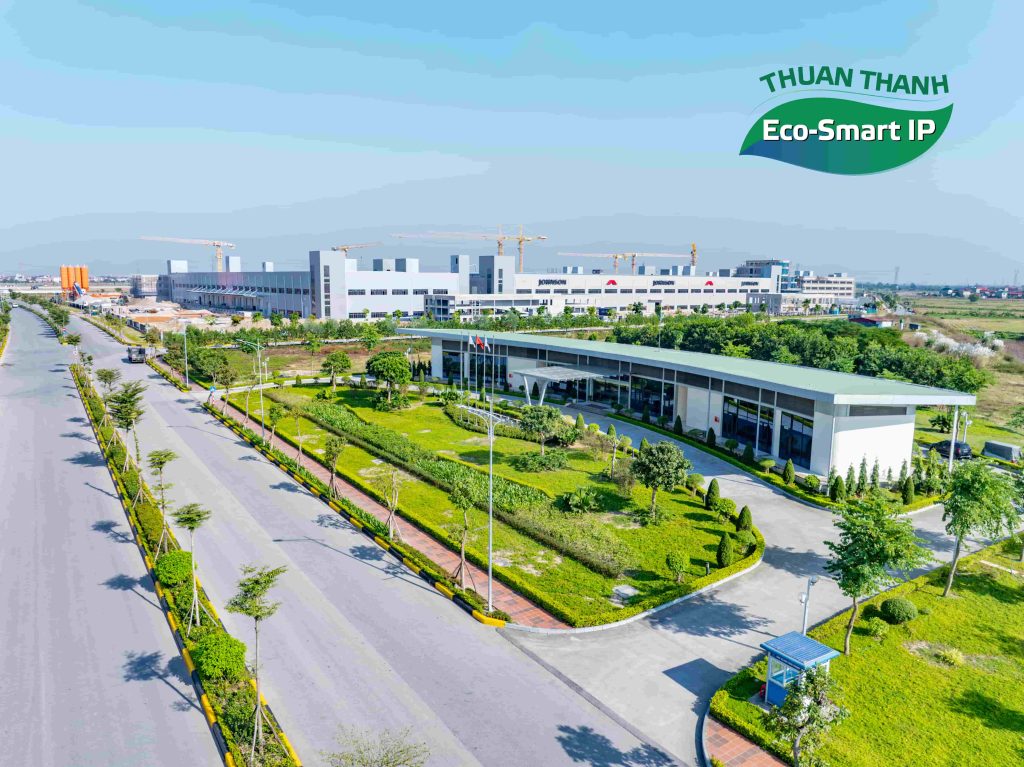
Green – Smart solutions have now been piloted by Viglacera at several industrial parks within its system, most notably Thuan Thanh Eco-Smart IP and Yen Phong 2C. From the initial results, Viglacera is continuing to refine its criteria set, drawing from practical experiences to gradually replicate the model to other industrial parks in the system, aiming to synchronize green – smart standards across the entire portfolio of industrial parks invested and developed by Viglacera.
Actively partnering with leading experts and continuously updating according to international standard frameworks and trends demonstrates Viglacera’s long-term commitment to the sustainable development journey. This not only meets the increasingly stringent ESG requirements from foreign investors but also contributes alongside the Vietnamese business community to building a green, modern, and competitive industrial park ecosystem in the new development phase.
Also within the framework of the event, Viglacera introduced lines of building material products suitable for the industrial and factory segments, meeting green criteria, energy saving, operating costs, and product life cycle. Notably, these include Energy-Saving Glass (certified with the US EPD green product standard), Autoclaved Aerated Concrete (a member of the Singapore Green Building Council – SGBC), along with ceramic tiles and sintered stone (meeting the US GreenGuard UL standard). These products received significant interest from leading experts attending the event.